Buy smart-parking.eu ?
We are moving the project
smart-parking.eu .
Are you interested in purchasing the domain
smart-parking.eu ?
domain@kv-gmbh.de · 0541-91531010
Buy smart-parking.eu ?
What is parallel and perpendicular parking?
Parallel parking is a method of parking a vehicle parallel to the curb, typically between two other parked vehicles. It involves pulling up alongside the vehicle in front of the empty parking space, backing into the space at an angle, and straightening out the vehicle. Perpendicular parking, on the other hand, is parking a vehicle at a 90-degree angle to the curb, often in parking lots or garages. It involves pulling straight into the parking space and aligning the vehicle within the lines. **
Can you unlearn reverse parallel parking?
Yes, it is possible to unlearn reverse parallel parking. Unlearning a skill involves consciously breaking down the learned behavior and then retraining the brain with a new behavior. This can be achieved through practice, repetition, and focused attention on the new technique. With dedication and effort, it is possible to unlearn and relearn reverse parallel parking or any other skill. **


Similar search terms for Parallel
Top-Angebote
Products related to Parallel:


-
What is the difference between parking and parallel parking?
Parking refers to the act of stopping a vehicle and leaving it in a designated spot, such as a parking lot or parking space along the side of the road. Parallel parking, on the other hand, is a specific type of parking maneuver where a vehicle is parked parallel to the curb, typically between two other parked vehicles. Parallel parking requires the driver to maneuver the vehicle into a tight space by aligning it parallel to the curb, using a combination of forward and backward movements. **
-
What is the difference between parking and parallel parking? Thank you.
Parking refers to the act of stopping a vehicle and leaving it in a designated spot, such as a parking lot or parking space on the side of the road. Parallel parking, on the other hand, is a specific type of parking where a vehicle is parked parallel to the curb in a space between two other parked vehicles. Parallel parking requires the driver to maneuver the vehicle into the space by reversing into it, while regular parking can involve pulling straight into a spot. **
-
How do you steer when parallel parking in reverse?
When parallel parking in reverse, you should turn the steering wheel towards the curb or the side of the road where you want the rear of your vehicle to go. For example, if you want to park on the right side of the road, turn the steering wheel to the right. This will help guide the rear of your vehicle into the parking space while allowing the front to swing out. Remember to go slow and make small adjustments as needed to position your vehicle properly in the parking space. **
-
Will parallel parking be included in the driving test?
Parallel parking is a common maneuver tested during driving exams in many countries. It is an important skill that demonstrates a driver's ability to control the vehicle in tight spaces and requires good spatial awareness. Therefore, it is likely that parallel parking will be included in the driving test to assess the candidate's proficiency in this essential driving skill. **

How does parallel parking with a small car differ?
Parallel parking with a small car differs from parallel parking with a larger car in a few key ways. First, a small car typically has a smaller turning radius, making it easier to maneuver into tight parking spaces. Additionally, a small car is generally easier to judge in terms of distance and positioning, allowing for more precise parking. Finally, small cars often have better visibility due to their size, making it easier to see the surrounding obstacles and adjust accordingly while parallel parking. **
Does parallel parking come up in the practical driving test?
Yes, parallel parking is a common maneuver that may come up in the practical driving test. It is important for drivers to demonstrate their ability to safely and accurately parallel park as it is a necessary skill for navigating tight parking spaces in real-world driving situations. Test examiners may ask candidates to parallel park between two vehicles or cones to assess their control, accuracy, and observation skills. Practice and mastering parallel parking can help increase the chances of passing the driving test successfully. **
Top-Angebote
Products related to Parallel:
-
StarTech.com 1-Port Parallel PCIe Card, PCI Express to Parallel DB25 LPT Adapter Card, Desktop Expansion Controller for Printer, SPP/ECP - parallel adStarTech.com 1-Port Parallel PCIe Card, PCI Express to Parallel DB25 LPT Adapter Card, Desktop Expansion Controller for Printer, SPP/ECP - Parallel adapter - PCIe - IEEE 1284 - black34,49 £*Shipping: 0,00 £Secure redirect to the provider
-
What is parallel and perpendicular parking?
Parallel parking is a method of parking a vehicle parallel to the curb, typically between two other parked vehicles. It involves pulling up alongside the vehicle in front of the empty parking space, backing into the space at an angle, and straightening out the vehicle. Perpendicular parking, on the other hand, is parking a vehicle at a 90-degree angle to the curb, often in parking lots or garages. It involves pulling straight into the parking space and aligning the vehicle within the lines. **
-
Can you unlearn reverse parallel parking?
Yes, it is possible to unlearn reverse parallel parking. Unlearning a skill involves consciously breaking down the learned behavior and then retraining the brain with a new behavior. This can be achieved through practice, repetition, and focused attention on the new technique. With dedication and effort, it is possible to unlearn and relearn reverse parallel parking or any other skill. **
-
What is the difference between parking and parallel parking?
Parking refers to the act of stopping a vehicle and leaving it in a designated spot, such as a parking lot or parking space along the side of the road. Parallel parking, on the other hand, is a specific type of parking maneuver where a vehicle is parked parallel to the curb, typically between two other parked vehicles. Parallel parking requires the driver to maneuver the vehicle into a tight space by aligning it parallel to the curb, using a combination of forward and backward movements. **
-
What is the difference between parking and parallel parking? Thank you.
Parking refers to the act of stopping a vehicle and leaving it in a designated spot, such as a parking lot or parking space on the side of the road. Parallel parking, on the other hand, is a specific type of parking where a vehicle is parked parallel to the curb in a space between two other parked vehicles. Parallel parking requires the driver to maneuver the vehicle into the space by reversing into it, while regular parking can involve pulling straight into a spot. **
Similar search terms for Parallel
-
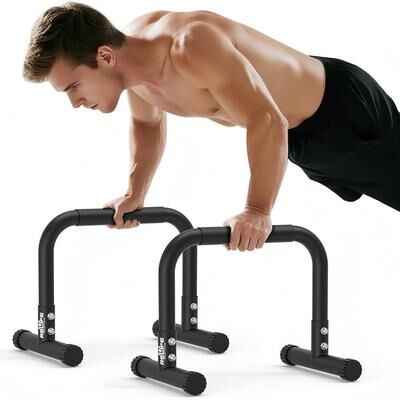
Smart Shopping Spot Relife Heavy Duty Dip Station With Parallel Bars For Home Gym Strength Training Relife Heavy Duty Dip Station With Parallel Bars For Home Gym Strength TrainingTransform your workouts with a sturdy training station built to help you gain strength and confidence at home. This Dip station is designed for fitness enthusiasts, beginners, and experienced athletes looking for reliable Home gym equipment. Its...79,97 $*Shipping: 0,00 $Secure redirect to the provider
-
How do you steer when parallel parking in reverse?
When parallel parking in reverse, you should turn the steering wheel towards the curb or the side of the road where you want the rear of your vehicle to go. For example, if you want to park on the right side of the road, turn the steering wheel to the right. This will help guide the rear of your vehicle into the parking space while allowing the front to swing out. Remember to go slow and make small adjustments as needed to position your vehicle properly in the parking space. **
-
Will parallel parking be included in the driving test?
Parallel parking is a common maneuver tested during driving exams in many countries. It is an important skill that demonstrates a driver's ability to control the vehicle in tight spaces and requires good spatial awareness. Therefore, it is likely that parallel parking will be included in the driving test to assess the candidate's proficiency in this essential driving skill. **
-
How does parallel parking with a small car differ?
Parallel parking with a small car differs from parallel parking with a larger car in a few key ways. First, a small car typically has a smaller turning radius, making it easier to maneuver into tight parking spaces. Additionally, a small car is generally easier to judge in terms of distance and positioning, allowing for more precise parking. Finally, small cars often have better visibility due to their size, making it easier to see the surrounding obstacles and adjust accordingly while parallel parking. **
-
Does parallel parking come up in the practical driving test?
Yes, parallel parking is a common maneuver that may come up in the practical driving test. It is important for drivers to demonstrate their ability to safely and accurately parallel park as it is a necessary skill for navigating tight parking spaces in real-world driving situations. Test examiners may ask candidates to parallel park between two vehicles or cones to assess their control, accuracy, and observation skills. Practice and mastering parallel parking can help increase the chances of passing the driving test successfully. **
* All prices are inclusive of VAT and, if applicable, plus shipping costs. The offer information is based on the details provided by the respective shop and is updated through automated processes. Real-time updates do not occur, so deviations can occur in individual cases. ** Note: Parts of this content were created by AI.